In business, cleverness wins headlines. Integrity wins decades.
That difference rarely shows in the short term. In the short term, the shortcut looks intelligent, the grey-area deal looks pragmatic, and whoever insists on doing everything properly looks slow. Only with time does the bill arrive, and it arrives on both sides: charging those who cut corners and protecting those who walked straight.
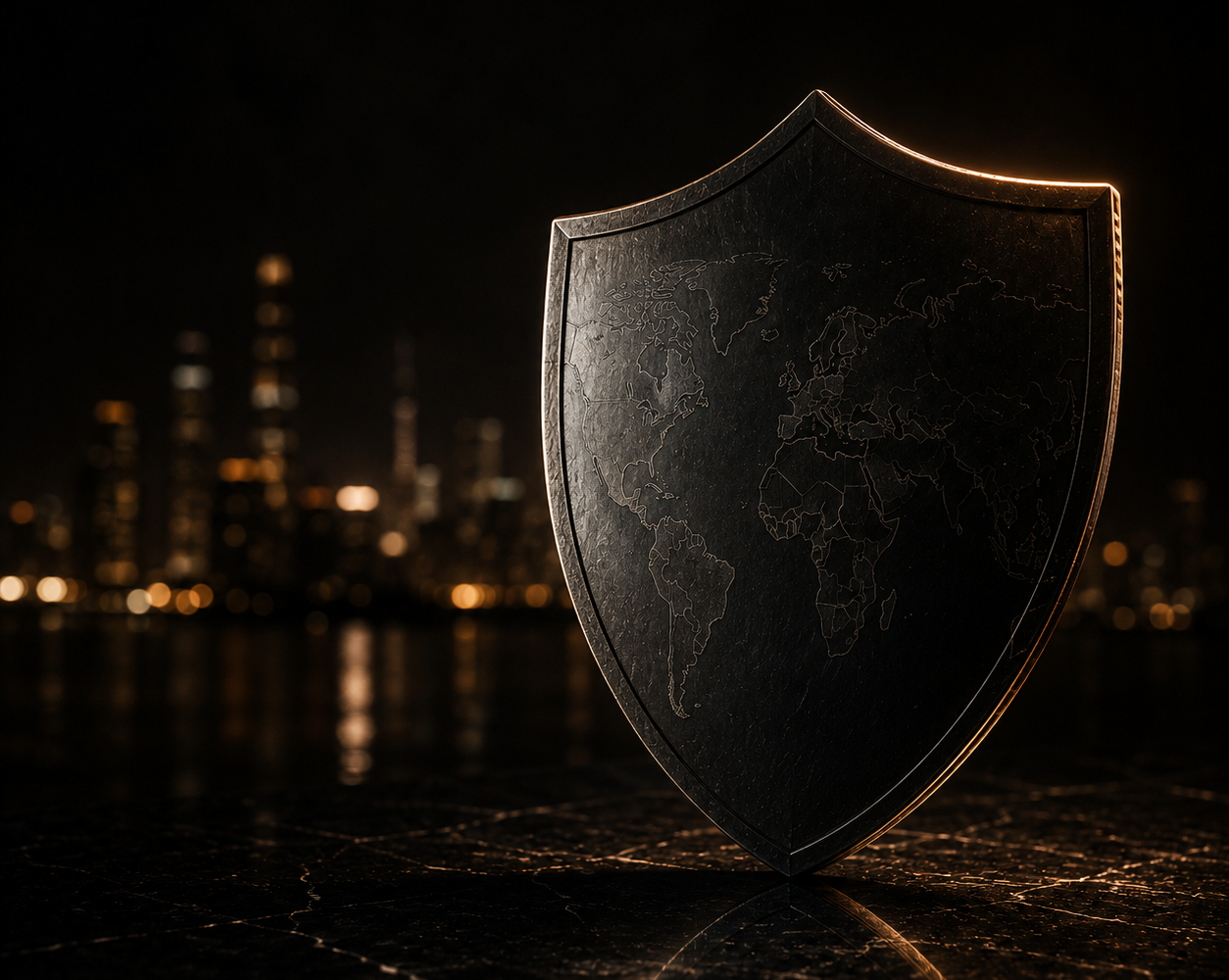
Proverbs 2 sums this up in one image: God “is a shield to those whose walk is blameless”. And right after, it describes the other path, that of men who “leave the straight paths to walk in dark ways”, who “rejoice in doing evil” and whose paths are crooked.
Notice: the text is not talking about incompetent people. It is talking about people who chose to swerve. And in international business, where complexity multiplies the opportunities to swerve, that choice defines who survives.
Complexity multiplies temptation
The bigger the operation, the more borders it crosses. Different jurisdictions, different regulations, different business cultures, partners you have known for a short time, and contracts that depend on trust built at a distance.
Every new layer of complexity brings a new temptation to cut corners.
The document that could have been simplified. The verification that could have been skipped. The partner nobody checked properly because the opportunity was too good. The structure that solves things quickly today and becomes a liability tomorrow.
It is in that environment that integrity stops being a values statement and becomes an architectural decision. Because in complex markets, the shortcut does not disappear. It stays on record, dormant, waiting for the worst possible moment to collect.
Proverbs 2 calls that a crooked path. And the defining trait of the crooked path is this: it looks like a route, but it is debt.
Integrity is a shield, not an ornament
There is a shallow reading of integrity that treats it as a moral ornament: something nice to say on the corporate website and negotiable in practice.
The reading of Proverbs 2 is different. Integrity is a shield. It protects things no cleverness can protect:
It protects reputation, which in international markets is the asset that opens and closes doors before any meeting.
It protects long-term relationships, because serious partners choose whoever gives them no surprises.
It protects the operation itself, because a structure built in a straight line does not live under the risk of falling apart when someone looks closely.
And it protects something few people put on a balance sheet: the peace of the decision-maker. Whoever walks straight does not need to manage versions of the truth, remember what was hidden from whom, or live calculating exposure. That freed-up energy becomes capacity to build.
Compliance is not bureaucracy. It is structural seriousness.
In regulated sectors, especially in the financial world, there is a recurring temptation to treat compliance as dead weight: cost, slowness, bureaucracy that hinders innovation.
My reading is the opposite. Compliance is the institutional version of integrity. It is the company saying, with structure rather than slogans, that it intends to exist for decades.
Whoever builds within the regulatory framework builds more slowly through certain stretches. But they build something that withstands scrutiny, crosses cycles, and becomes eligible for the partnerships that truly matter. Meanwhile, whoever grows outside the framework grows with an expiry date.
In international business, the most valuable partners ask a silent question before any contract: can this company withstand being looked at closely? The answer to that question is worth more than any pitch.
What Proverbs 2 teaches about business in practice
1. Choose partners by their paths, not by their promises
The chapter tells us to observe the road a person walks, not the speech they give. Partners are chosen by their track record of uprightness, not by the size of the opportunity.
2. Distrust whoever delights in the shortcut
Whoever celebrates the small cleverness will practise the big one when pressure arrives.
3. Build to withstand scrutiny
If the operation depends on nobody looking closely, it is already compromised.
4. Accept growing more slowly in a straight line
Speed on a crooked path is not progress. It is a fall brought forward.
5. Refuse the wrong deal
The ability to say no to a profitable but misaligned opportunity is the most honest test of integrity there is.
From zero to black belt: how to build corporate integrity
Level 0 — Understand what integrity means in business
It is not perfection. It is coherence between what is said, what is signed and what is done when nobody is watching.
Level 1 — Put integrity into small decisions
- honour the agreement even when it became expensive
- correct the mistake before being called out
- never dress up a number to look better
Level 2 — Recognise the crooked paths
- the brilliant partner with a murky past
- the regulatory shortcut that “everybody takes”
- the contract that only works if nobody reads it properly
- the client whose money you’d rather not ask about
Level 3 — Turn integrity into structure
- real verification and compliance processes
- transparency with partners, regulators and the team
- documentation that withstands an audit
- a culture where reporting a problem is safe
Level 4 — Mature reading
- understand reputation as a compounding asset: it grows slowly and compounds for decades
- use compliance as a competitive edge in serious markets
- build the name that opens doors before you arrive
What I think about this
What I think is simple: reputation takes years to build and one wrong decision to destroy. And the most dangerous part is that the destroying decision almost never looks big at the time. It looks like a detail, an exception, a “just this once”.
In my view, in complex and regulated markets, integrity has stopped being merely a virtue and has become a concrete competitive advantage. Because trust has become scarce. And where trust is scarce, whoever can prove it with structure charges a premium.
I also think that the deal you refuse builds your name as much as the deal you close. Perhaps more. Because the market watches, and the market has a long memory.
What my journey has taught me so far
Building businesses across different countries, I learned that international complexity does not forgive a crooked foundation. What is a small deviation in a local operation becomes an existential risk when multiplied by jurisdictions, currencies and regulators.
I also learned that the best partners I found along the way had one trait in common: less spectacle and more predictability. People whose paths were straight, in the vocabulary of Proverbs. Over time, I understood that predictability of character is what sustains a long-term contract. The rest is paper.
And I learned that walking in integrity has a real, visible cost in the short term, and a silent, compounding return in the long term. Whoever only sees the cost abandons the path too soon.
Where I see the biggest traps
- choosing a partner for the opportunity and discovering the character later
- treating compliance as theatre for the regulator to watch
- accepting the first shortcut and normalising the following ones
- growing faster than the structure can bear
- confusing agility with documentary irresponsibility
- protecting toxic revenue out of fear of shrinking
Where I see the biggest opportunities
- turning compliance into a commercial argument
- building reputation in markets where trust is scarce
- attracting serious partners who filter by the same criteria
- lasting long enough to harvest what cleverness never harvests
- sleeping well, which is an underrated competitive advantage
Conclusion
Proverbs 2 hands us a business thesis disguised as an ancient text: the shield accompanies whoever walks in integrity, and the crooked path charges whoever chooses it.
Whoever cuts corners brings the result forward and brings the fall forward. Whoever walks straight builds slowly and builds to last. Whoever chooses partners by their paths avoids the most expensive surprises. Whoever withstands scrutiny does not fear the future.
In international business, this is not moralism. It is risk management at the deepest level.
In the end, the question is not whether your company grows. The more serious question is:
can your structure withstand being looked at closely, or does it depend on nobody looking?
In business, cleverness rents results; integrity buys the future.
Follow the Proverbs in Practice series at juniorgaino.com. Tomorrow we will apply Proverbs 2 to the mind and learning, showing why real learning requires digging, not just consuming.